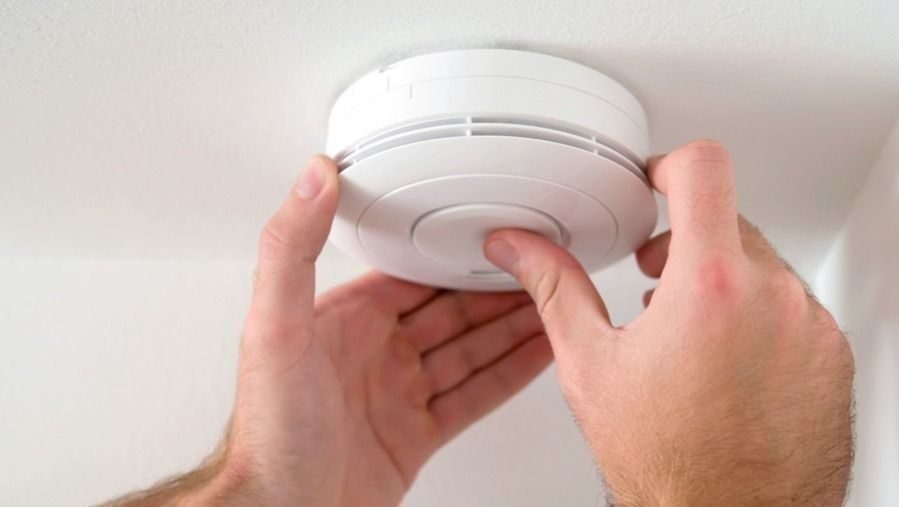
Smoke and carbon monoxide alarms are intended to provide early warning when dangerous conditions develop in the home. When detectors are missing, expired, damaged, poorly located, or no longer operating correctly, the household may not receive the warning those devices are meant to provide.
Perkin Electrical Services provides smoke CO detector installation in Round Rock, Austin, and surrounding Central Texas communities. Our electricians install and replace hardwired smoke alarms, carbon monoxide alarms, and combination smoke and CO detectors while evaluating the existing wiring and interconnection where applicable.
For homes with aging or incomplete alarm coverage, we can also coordinate installation with other residential electrical services when additional wiring or electrical corrections are needed.
Hardwired Smoke Detector Installation
Hardwired smoke alarms connect to the home’s electrical system instead of relying only on a replaceable battery.
Many hardwired alarms also include a battery backup, so they can keep operating during certain power interruptions.
Installation may involve:
-
Replacing an existing hardwired detector
-
Adding a detector in a new location
-
Connecting the unit to existing alarm wiring
-
Installing compatible interconnection wiring
-
Replacing damaged electrical boxes
-
Correcting loose or deteriorated connections
-
Installing combination smoke and CO alarms
The exact work depends on the existing system and the detector being installed.
Carbon Monoxide Detector Installation
Carbon monoxide is colorless and odorless, so occupants may not recognize a problem without a working alarm.
Carbon monoxide detectors may be installed as standalone devices or as combination units that also detect smoke.
A CO detector installation should account for:
The electrician can evaluate the current alarm setup and determine how to incorporate new or replacement devices.
Combination Smoke and CO Detectors
Combination smoke and carbon monoxide detectors provide both functions in one device.
They can be useful when homeowners want to reduce the number of separate alarm units while maintaining both types of detection.
Depending on the home and equipment, combination alarms may include:
Before installation, the replacement device should be compatible with the existing wiring and alarm system.
Replacing Old or Expired Detectors
Smoke and CO alarms do not last indefinitely.
Over time, sensors and electronic components can age even when the device still appears normal from the outside.
A detector may need replacement when:
-
It has reached the end of its recommended service life
-
It no longer passes its test function
-
It chirps despite appropriate battery replacement
-
The unit is damaged
-
The alarm is discolored or physically deteriorated
-
The manufacturer recommends replacement
-
Existing units are no longer compatible with the alarm system
The manufacture date or replacement information is often printed on the alarm itself.
Homeowners should follow the manufacturer’s replacement guidance for the specific detector model.
Interconnected Smoke Alarms
Interconnected alarms are designed so that when one unit activates, connected alarms elsewhere in the home can also sound.
This can be especially useful when a problem develops in a part of the home that is separated from sleeping areas.
Interconnection may be provided through:
-
Existing hardwired alarm wiring
-
Compatible wireless communication
-
A combination of electrical and wireless features
When replacing interconnected alarms, compatibility matters.
Installing one incompatible unit can affect how the system communicates, so the electrician should verify the existing setup before replacement.
Adding Detectors Where None Exist
Some homes may need additional smoke or CO alarms because of renovations, additions, room conversions, or incomplete existing coverage.
Adding a detector in a new location may require:
-
New electrical wiring
-
A new electrical box
-
Connection to an existing alarm circuit
-
Interconnection with other detectors
-
Access through an attic or ceiling space
If new wiring is necessary, the project can be coordinated with appropriate wiring and rewiring work rather than relying on exposed or temporary wiring methods.
Smoke and CO Detectors During Remodeling
A remodel can be a practical time to review the home’s alarm system.
Changes to bedrooms, hallways, additions, finished spaces, or floor plans may affect where detectors should be located.
During a larger home improvement project, you can evaluate smoke and CO alarms alongside new wiring, lighting, switches, and other electrical improvements.
Planning detector locations before you close walls and ceilings can make new wiring easier to install.
Why a Hardwired Detector Keeps Chirping
A chirping alarm does not always mean the detector is responding to smoke or carbon monoxide.
Possible causes can include:
The meaning of the chirp pattern varies by manufacturer and model.
If replacing the backup battery doesn’t resolve the issue, the alarm’s instructions or device markings can help you determine whether the unit has reached the end of its service life.
Why a Hardwired Alarm Has No Power
A hardwired detector may stop receiving power because of:
If several alarms stop working at the same time, the problem may extend beyond one detector.
When the issue originates in the circuit or electrical connection, electrical troubleshooting and repair may be needed before replacement alarms are installed.
Smoke Detector Wiring Problems
Existing smoke alarm wiring can sometimes reveal problems when an older device is removed.
An electrician may encounter:
Don’t simply attach a new alarm to damaged or unsuitable wiring.
An electrician can correct accessible electrical problems and determine whether further investigation is needed.
Smart Smoke and CO Detectors
Some homeowners choose connected smoke and CO alarms that provide additional notifications or integration with compatible smart-home systems.
Features may include:
-
Mobile alerts
-
Voice notifications
-
Device status information
-
Remote monitoring features
-
Integration with other connected devices
The selected product must still be appropriate for the home’s existing wiring and alarm configuration.
When you update several connected devices at once, you can coordinate detector installation with a broader smart home electrical setup.
Smoke and CO Detector Placement
Detector placement affects how useful an alarm system can be.
The correct locations depend on the home, local requirements, manufacturer instructions, and the type of detector being installed.
Factors may include:
-
Bedrooms
-
Areas outside sleeping rooms
-
Different levels of the home
-
Hallways
-
Equipment locations
-
Ceiling and wall geometry
-
Distance from certain appliances or air sources
The electrician can install the device in an appropriate location based on the specific project and applicable installation requirements.
What Happens During Detector Installation?
A typical installation may involve several steps.
1. Review the existing alarm system
The electrician identifies the detector types, wiring, interconnection, and visible condition of the current system.
2. Confirm replacement or new locations
Existing detector locations are reviewed, and any new locations are planned.
3. Evaluate wiring and electrical boxes
Accessible wiring and mounting boxes are checked before the new alarms are connected.
4. Install compatible detectors
The new smoke, CO, or combination alarms are installed according to their configuration.
5. Test the completed installation
The electrician tests the newly installed devices and applicable interconnection.
Smoke and CO Detectors in Older Homes
Older homes may have:
-
Battery-only alarms
-
Missing detectors
-
Older hardwired systems
-
Incomplete interconnection
-
Devices from several different replacement periods
-
Previous electrical modifications
Updating the alarm system does not necessarily require rewiring the entire home.
The electrician can determine what existing infrastructure is usable and where new wiring or replacement equipment is appropriate.
A broader electrical safety inspection may also identify other visible electrical conditions that deserve attention in an older property.
Smoke and CO Detector Installation in Central Texas
Homes throughout Round Rock, Austin, and surrounding Central Texas communities vary in age, layout, renovation history, and existing alarm systems.
A property may have original hardwired detectors, newer replacement units, additions with separate alarm equipment, or areas where detectors were never updated after remodeling.
These differences make it useful to evaluate the existing alarm system before simply replacing one device at a time.