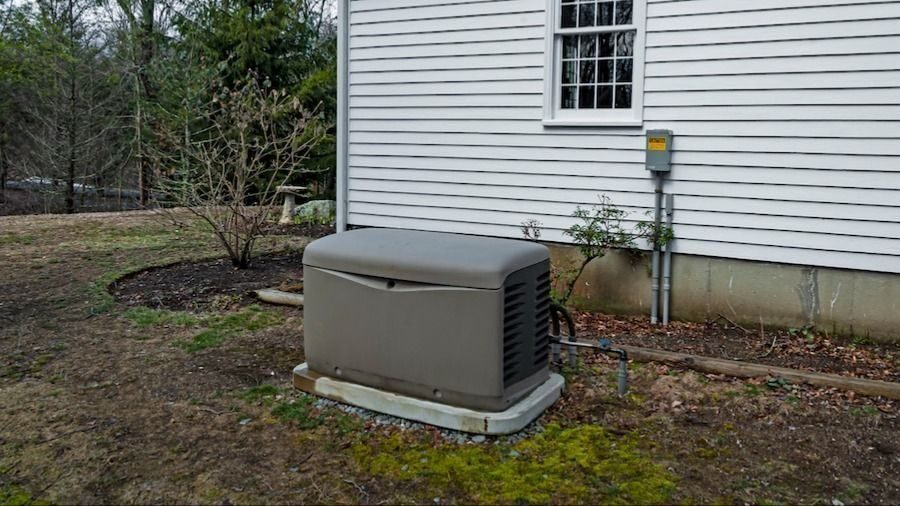
Power outages can interrupt refrigeration, heating and cooling, lighting, internet equipment, pumps, medical devices, and other systems a household depends on. A properly configured generator gives homeowners a way to supply backup electricity when utility power is unavailable.
Perkin Electrical Services provides residential generator installation in Round Rock, Austin, and surrounding Central Texas communities. Our electricians evaluate the home’s electrical system, discuss which loads need backup power, and install the electrical equipment required to connect the generator safely to the home.
Generator work is part of our broader residential electrical services, with each installation planned around the home’s existing electrical equipment and backup power priorities.
How Does A Home Generator System Work?
A home generator supplies an alternate source of electricity when utility service is unavailable. The generator works with electrical equipment that isolates the home from utility power before generator power is supplied to the electrical system.
Depending on the configuration, backup power may support selected circuits or a larger portion of the home. A complete setup can include the generator, transfer equipment, breakers, electrical feeders, control wiring, grounding and bonding components, and connections to the home’s existing electrical panel.
The generator itself is only one part of the system. Each component must be configured so backup electricity reaches the intended circuits while remaining properly separated from utility power.
Generator Installation And Backup Power Planning
Generator installation starts with determining what needs to remain powered during an outage. Some homeowners prioritize refrigeration, lighting, internet equipment, and a few receptacle circuits. Others want to support HVAC equipment, kitchen appliances, pumps, garage doors, home offices, or a larger portion of the house.
Our electricians evaluate factors such as:
-
Existing electrical service
-
Electrical panel configuration
-
HVAC equipment
-
Major appliances and pumps
-
Generator output
-
Starting and operating electrical loads
-
Desired backup circuits
-
Available load-management options
Square footage alone does not determine generator requirements. The electrical demand of the equipment you intend to operate matters when planning generator capacity and the connection to the home’s electrical system.
Generator Transfer Switches And Interlock Kits
A generator needs equipment that prevents generator power and utility power from feeding the home’s electrical system at the same time. The appropriate setup depends on the generator, electrical panel, desired backup coverage, and overall system configuration.
Transfer Switches
A transfer switch controls the connection between utility power and the backup power source. Transfer switches may be configured to support selected circuits, a dedicated backup panel, or a larger portion of the home’s electrical system depending on the installation.
For permanently installed standby generators, transfer equipment can also allow the system to transition between utility and generator power according to the equipment’s operating configuration.
Interlock Kits
An interlock kit provides another method of connecting compatible generator equipment through the home’s electrical panel. The interlock mechanically prevents the main breaker and generator supply breaker from being switched on simultaneously, keeping the utility and generator power sources separated.
Interlock kits are not appropriate for every panel or generator setup. Our electricians can evaluate the existing electrical equipment and determine whether an interlock kit, transfer switch, or another approved configuration fits the planned backup power system.
Electrical Panels, Wiring And Generator Installation
The home’s electrical panel is an important part of generator planning. Before installation, our electricians may evaluate the panel configuration, available breaker spaces, existing loads, service equipment, and the condition of accessible electrical components.
Some homes can support generator-related electrical work with their existing equipment. If the panel is damaged, outdated, or unsuitable for the planned configuration, an electrical panel upgrade can be coordinated with the project.
Alt Text: Residential electrical panel prepared for generator connection
Generator installation may also require feeder conductors, control wiring, conduit, disconnects, grounding and bonding work, and connections between the generator and electrical distribution equipment. When existing wiring conditions interfere with the installation, appropriate wiring and rewiring can be incorporated into the project.
Generator placement also matters. Equipment location must account for manufacturer requirements, building openings, existing utilities, electrical equipment locations, maintenance access, drainage, physical protection, and property conditions.
What To Expect During Generator Installation
Each generator project varies based on the home and selected equipment, but the electrical installation generally follows a planned process.
-
Backup Power Planning. We discuss which appliances, equipment, and areas of the home you want available during an outage.
-
Electrical Evaluation. Our electricians review the electrical service, panel, loads, and existing distribution equipment.
-
Equipment Planning. We determine appropriate locations and configurations for generator connections, transfer equipment, wiring, and related components.
-
Electrical Installation. Required wiring, conduit, breakers, disconnects, transfer equipment, or compatible interlock equipment is installed.
-
System Connection And Testing. The generator connection and related electrical components are checked to confirm the completed setup operates as intended.
Permitting, fuel-system work, equipment requirements, and property conditions may affect the exact project sequence.
Schedule Generator Installation Services
A generator can provide useful backup power, but the system needs to be coordinated with the home’s electrical service, panel, transfer equipment, wiring, and expected loads.
Perkin Electrical Services provides generator installation, generator repair, and backup power installation in Round Rock, Austin, and surrounding Central Texas communities.
Our electricians can evaluate the existing electrical system, determine how the generator should integrate with the home, install the necessary electrical components, and troubleshoot electrical problems affecting existing standby systems.
Contact Perkin Electrical Services to discuss a home generator installation.