Commercial Electrical Contracting for General Contractors
Electrical work rarely exists in isolation on a commercial project. Conduit routes, panel locations, equipment requirements, lighting layouts, mechanical systems, wall assemblies, ceilings, and finish work all affect the electrical scope.
A commercial electrical contractor may be involved in:
- New commercial construction
- Tenant improvements
- Office build-outs
- Retail renovations
- Commercial additions
- Building expansions
- Equipment upgrades
- Lighting renovations
- Electrical service modifications
- Generator-related electrical work
- Interior remodels
- Exterior electrical improvements
- Phased construction projects
The exact scope depends on the plans, project requirements, existing conditions, and work being completed by other trades.
Electrical Design Coordination
Electrical design affects how power is distributed throughout a commercial space and how the system supports lighting, equipment, controls, receptacles, mechanical systems, and other loads.
Depending on the project, electrical design coordination may involve reviewing or planning:
- Panel locations
- Circuit distribution
- Receptacle locations
- Lighting layouts
- Equipment power requirements
- Dedicated circuits
- Disconnect locations
- Conduit pathways
- Service requirements
- Emergency or standby power connections
- Future electrical capacity
The electrical contractor does not replace an engineer when engineered plans or stamped drawings are required. However, field conditions, constructability concerns, equipment information, and installation requirements often need coordination among the contractor, general contractor, design team, and other trades.
Identifying those issues early can reduce avoidable changes after walls, ceilings, or other finished surfaces are installed.
Electrical Load Calculations
Commercial electrical systems must be sized according to the loads they are expected to serve. When a project adds equipment, expands a tenant space, modifies a service, or changes how a building is used, you may need an electrical load calculation to determine whether the existing electrical system can support the proposed work.
Load calculations may consider:
- Existing connected loads
- Proposed equipment
- Lighting loads
- HVAC equipment
- Receptacle loads
- Motors
- Kitchen or specialty equipment
- Dedicated circuits
- Future planned loads
- Service and feeder capacity
The appropriate calculation depends on the project and applicable requirements.
A visual inspection of a panel alone cannot establish available electrical capacity. The electrical contractor may need equipment information, existing system data, field measurements, plans, or other documentation before determining what additional loads it can support.
Electrical Rough-In
The electrical rough-in phase establishes much of the infrastructure that will later be concealed behind walls, ceilings, and finished surfaces.
Depending on the project, rough-in work may include:
- Installing conduit
- Routing cable or conductors
- Setting electrical boxes
- Preparing device locations
- Installing raceways
- Establishing circuit pathways
- Preparing panel and equipment connections
- Providing wiring for lighting
- Preparing dedicated equipment circuits
- Coordinating electrical penetrations
- Supporting low-voltage pathways when included in scope
Rough-in must be coordinated carefully with framing, plumbing, mechanical work, fire protection, and other building systems.
A conflict discovered before installation may require only a layout adjustment. The same conflict discovered after walls or ceilings are closed can be much more disruptive.
Coordination During the Rough-In Phase
General contractors depend on each trade completing work in the proper sequence. Electrical rough-in may need to occur before insulation, drywall, ceiling installation, equipment setting, or other finishing work.
Useful coordination during this stage includes confirming:
- Wall and ceiling layouts
- Equipment locations
- Door swings
- Millwork or cabinetry
- Mechanical equipment positions
- Plumbing routes
- Ceiling heights
- Lighting locations
- Access requirements
- Fire-rated assemblies
- Changes from the original plans
Field conditions sometimes differ from drawings. When that happens, the electrical scope may need adjustment before installation continues.
Early communication helps prevent electrical work from interfering with another trade or being installed in a location that later becomes inaccessible.
Electrical Trim-Out
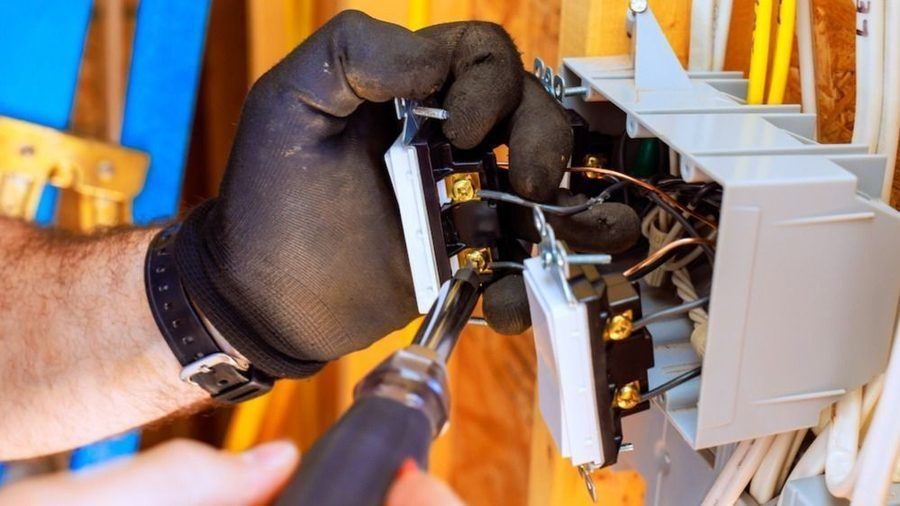
The electrical trim-out phase occurs after much of the building’s finish work is in place and focuses on installing and completing visible electrical components.
Trim-out may include:
- Installing receptacles
- Installing switches
- Installing device plates
- Connecting lighting fixtures
- Completing controls
- Installing breakers where required
- Connecting equipment
- Completing panel labeling
- Installing disconnects
- Finishing electrical devices
- Testing completed circuits
This phase requires coordination with finished surfaces, cabinetry, ceilings, equipment placement, and other completed construction.
Trim-out is also where inconsistencies between plans, rough-in locations, and final field conditions may become apparent. When changes are required, the electrical contractor can help determine the most practical correction.
Commercial Electrical Upgrades
Not every commercial project begins with a blank building. Many renovations and tenant improvements require integrating new electrical work with an existing system.
Commercial electrical upgrades may be needed when:
- Existing panels lack sufficient capacity
- New equipment requires dedicated circuits
- Lighting systems are being replaced
- Tenant layouts have changed
- Existing devices are damaged or outdated
- Building usage has changed
- Additional receptacles are required
- Electrical distribution needs modification
- Existing wiring conflicts with renovation plans
- Equipment is being relocated
The scope of an upgrade depends on the existing system and the requirements of the new work.
An older system does not automatically need full replacement. The electrician evaluates what can remain, what needs modification, and which components require further investigation.
Electrical Panel and Distribution Work
Commercial panels and distribution equipment form the backbone of the building’s electrical system.
Construction and renovation projects may require:
- New panels
- Additional circuits
- Breaker changes
- Feeder modifications
- Panel relocation
- Distribution changes
- New disconnects
- Equipment connections
- Circuit identification
- Replacement of damaged components
Plan electrical distribution around both the immediate project and the loads the system must support after construction is complete.
When existing equipment is involved, the electrical contractor may also need to evaluate available space, equipment condition, ratings, and compatibility before making modifications.
Generator Electrical Coordination
Commercial generators require coordination between the generator equipment, transfer equipment, electrical distribution system, fuel or mechanical systems, and the loads intended to receive backup power.
Depending on the project scope, electrical work associated with a generator may involve:
- Feeder installation
- Disconnects
- Transfer equipment
- Control wiring
- Distribution modifications
- Generator connections
- Emergency or standby circuits
- Equipment grounding
- Coordination with existing panels
- Testing and commissioning support
You can’t select a generator based on building size alone. The intended loads, starting requirements, system configuration, and project goals all influence the electrical design.
For projects requiring generator installation or modifications, coordinate these requirements early enough to account for equipment placement, conduit routes, service changes, and construction sequencing.
Tenant Improvement Electrical Work
Tenant improvement projects often require significant electrical coordination because the building already has an existing system that must be adapted to a new layout or use.
Electrical work may include:
- Relocating outlets
- Adding dedicated circuits
- Modifying lighting
- Installing new controls
- Providing power for equipment
- Relocating switches
- Extending circuits
- Modifying panels
- Removing abandoned electrical components
- Supporting new walls or room layouts
Existing tenant spaces may also contain electrical work from previous renovations. Some modifications may be properly documented and usable, while others may require correction before the new scope proceeds.
A careful field evaluation helps determine how much of the existing installation can remain.
Electrical Work for Remodels and Renovations
Commercial renovations often uncover conditions that were not visible during initial planning.
Once ceilings, walls, or equipment are removed, contractors may discover:
- Abandoned wiring
- Undocumented splices
- Unexpected conduit routes
- Damaged conductors
- Older electrical equipment
- Incorrect circuit labeling
- Improper previous modifications
- Conflicts with new construction
- Limited panel capacity
These discoveries do not necessarily mean the entire electrical system requires replacement.
The electrical contractor evaluates the affected areas and explains which findings change the planned scope, which can remain, and which require additional investigation.
Working With Plans and Field Conditions
Construction documents provide the basis for the electrical scope, but field conditions can affect how that work is installed.
Differences may arise because of:
- Existing structural conditions
- Equipment dimensions
- Architectural changes
- Mechanical conflicts
- Revised tenant requirements
- Unexpected concealed conditions
- Changes to ceiling or wall layouts
- Product substitutions
- Accessibility limitations
When a change affects the electrical installation, identify it before proceeding whenever practical.
Clear documentation and communication help the general contractor understand whether the issue can be resolved in the field or requires further direction from the project team.
Coordinating With Other Trades
Electrical installation frequently intersects with mechanical, plumbing, framing, roofing, fire protection, millwork, and other scopes.
Examples of coordination points include:
- Mechanical equipment power
- Disconnect locations
- Roof penetrations
- Equipment clearances
- Lighting placement
- Ceiling coordination
- Wall penetrations
- Shared equipment rooms
- Generator placement
- Exterior equipment
- Access panels
Good coordination is not simply about avoiding physical conflicts. It also helps make sure electrical components remain accessible for installation, inspection, testing, and future service.
Changes During Construction
Commercial projects often change after work begins. Equipment selections are revised, walls move, tenants request modifications, or field conditions require a different approach.
Electrical changes may affect:
- Material quantities
- Circuit requirements
- Labor
- Conduit routes
- Panel schedules
- Lighting locations
- Equipment connections
- Project sequencing
When changes occur, the electrical contractor can evaluate how the revision affects completed work and what additional work will be needed.
Defining the electrical impact before proceeding can reduce misunderstandings later in the project.
Commercial Electrical Maintenance After Construction
Electrical work does not end when construction is complete. Buildings continue changing as tenants move in, equipment is replaced, and operational needs evolve.
Property owners or managers may later require troubleshooting, repairs, or scheduled commercial electrical maintenance services for the systems installed or modified during construction.
General contractors can support a smoother turnover by ensuring panels, circuits, disconnects, equipment, and other electrical components are properly identified before project completion.
Commercial Construction in Central Texas
Commercial development throughout Round Rock, Austin, and surrounding Central Texas communities includes new buildings, tenant improvements, office renovations, retail spaces, expansions, and conversions of existing properties.
Local project conditions can include:
- Rapidly changing tenant requirements
- Existing buildings with multiple previous renovations
- High outdoor temperatures affecting exterior equipment
- Tight construction schedules
- Limited access in occupied properties
- Equipment changes after initial design
- Increasing electrical demand
- Phased construction
These factors do not change the fundamentals of electrical installation, but they can affect planning, access, sequencing, and coordination.
Why General Contractors Need Early Electrical Coordination
Electrical problems become harder to resolve after construction advances.
A receptacle location can be adjusted relatively easily before closing a wall. A conduit route can be changed before ceilings are installed. Equipment power requirements can be addressed more efficiently before the equipment arrives onsite.
Early electrical coordination gives the project team an opportunity to identify:
- Missing information
- Load concerns
- Equipment requirements
- Conflicts between trades
- Access limitations
- Material needs
- Service modifications
- Potential sequencing issues
The goal is not to eliminate every possible project change. It is to reduce preventable electrical conflicts before they affect later phases of construction.